


Depending on the fittings, the cost of a new 10 m² bathroom typically runs to a five-figure euro sum in Germany, while a bathroom of 6 or 8 m² costs proportionately less.
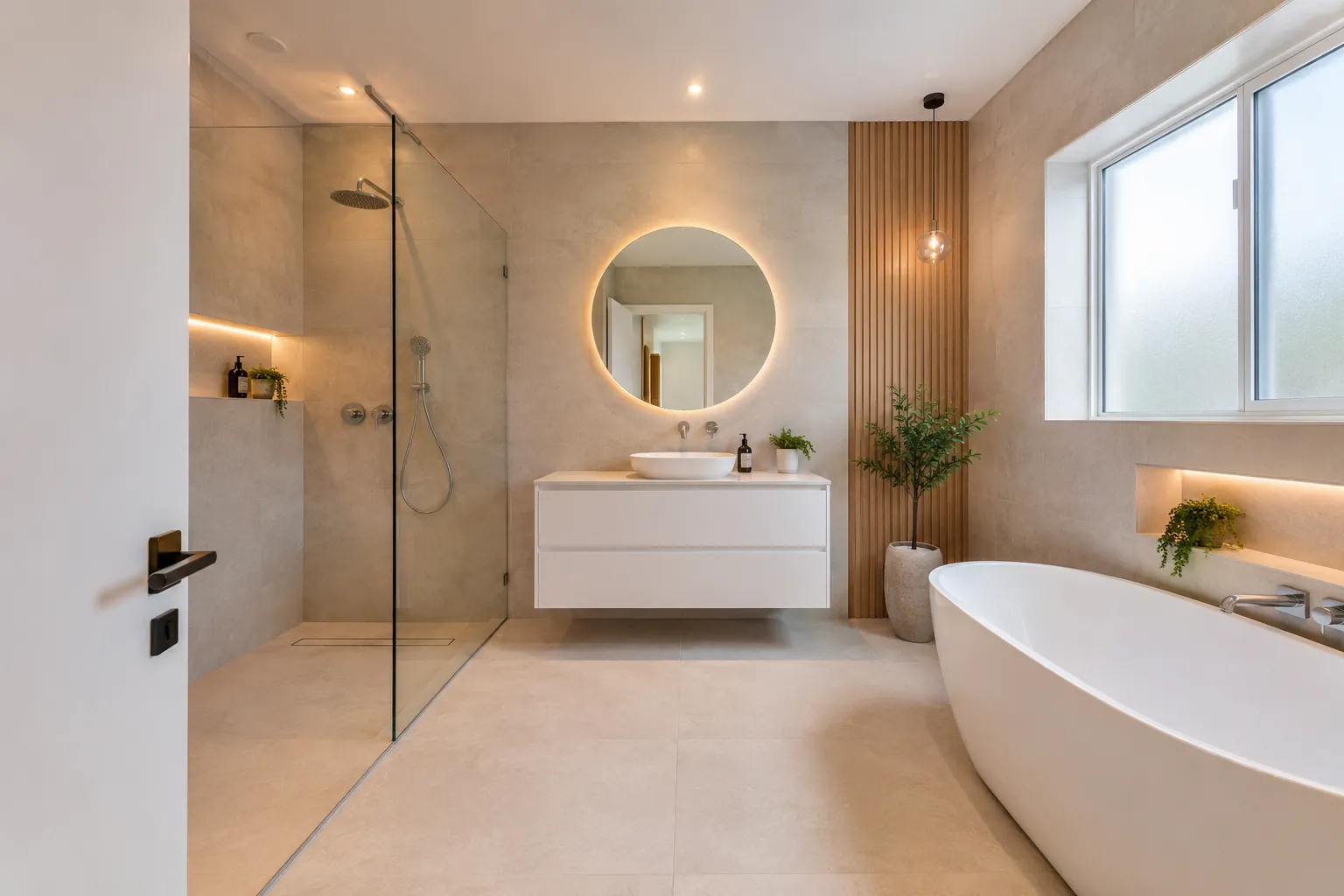
A new bathroom is one of the larger investments in your own home, and the question of what a new 10 m² bathroom costs almost always comes first. The answer depends heavily on the size of the room, the fittings and the scope of the work. A 6 m² guest bathroom involves different costs from a 10 m² family bathroom with a bathtub, shower and senior-friendly features.
In this guide, you will learn how the costs differ by square metre and what they are made up of.
The cost of a new bathroom at a glance
The total cost of a new bathroom is made up of many individual items, and hardly any two bathrooms are alike. If you are planning a simple refresh, you will need considerably less work than someone who is replacing the entire plumbing and converting the bathroom for later life. The range is correspondingly wide, from a manageable modernisation to an extensive complete renovation with relocated pipes and a new room layout.
Three factors have the greatest influence on the costs. First, the size of the room, because every additional square metre means more tiled area, more material and more working time. Second, the quality of the chosen sanitary fixtures and surfaces, which range from a simple standard solution to upmarket comfort features. Third, the scope of the structural work, in other words whether only surfaces are renewed or walls are moved, pipes relocated and the electrics adapted.
It is worth taking a realistic look at the budget early on, because the costs are not evenly distributed. As a rule, the largest share goes on the tradespeople's work, not on the materials themselves. If you are planning a complete age-friendly bathroom conversion, you should also set aside a reserve for unforeseen work, which often only becomes apparent once the old tiles have been removed.
Cost comparison by bathroom size from 6 to 10 m²
The number of square metres is the most obvious lever for the total cost, but its effect is not linear. A bathroom twice the size does not automatically cost twice as much, because certain basic costs arise regardless of the floor area. A new toilet, a vanity unit and the basic installation are needed in every bathroom, whether it measures 6 or 10 m². As the floor area grows, it is mainly the costs of tiles, floor covering and laying time that increase.
The following overview shows how the three common bathroom sizes differ in practice and which factors the costs react to most.
| Bathroom size | Typical situation | Cost comparison | What drives costs in particular |
|---|---|---|---|
| 6 m² | Small guest or city bathroom | Lowest total cost of the three sizes | Little floor area, but all trades are still needed |
| 8 m² | Average family bathroom | Medium range | More tiled area, often a bathtub and shower side by side |
| 10 m² | Spacious bathroom with room for an accessible conversion | Highest of the three sizes | Large surfaces, comfort features, more sanitary fixtures |
With a 6 m² bathroom, the absolute costs are lowest, but the price per square metre is often higher because the fixed basic costs are spread over a smaller area. An 8 m² bathroom usually offers enough space for both a bathtub and a shower and lies in the middle range. At 10 m², comfort increases noticeably, and at the same time there is more scope for a senior-friendly conversion with wider walkways and a low-threshold shower. It is precisely this additional space that makes a 10 m² bathroom particularly attractive if you are already thinking about easy-access everyday living.
What the costs are made up of
If you want to understand the costs, you should break them down by trade rather than by a flat rate per square metre. A bathroom renovation involves several trades working one after the other or in parallel. Each of these areas has its own share of the overall budget, and labour costs in particular often account for half to two thirds of the total. This explains why doing some of the work yourself in the right places makes such a difference.
It all starts with the strip-out. Old tiles, sanitary fixtures and sometimes entire false walls have to come out, and the rubble has to be disposed of. This is followed by the first-fix installation, in other words laying new water and waste pipes and adapting the electrics for lighting, sockets and, if required, electric underfloor heating. This step involves more work in an older building than in a new build, because pipes often have to run in new positions.
The largest visible block is tiles and floor coverings. Here, format, material and laying method determine the costs, because large-format or slip-resistant tiles are more expensive to buy and lay. Next come the sanitary fixtures, in other words the toilet, vanity unit, shower or bathtub and taps, whose prices vary widely between basic and upmarket ranges. Painting, doors and planning complete the job. If you want to get a better idea of the individual steps, a realistic sequence will help with your planning.
A senior-friendly bathroom and its additional costs
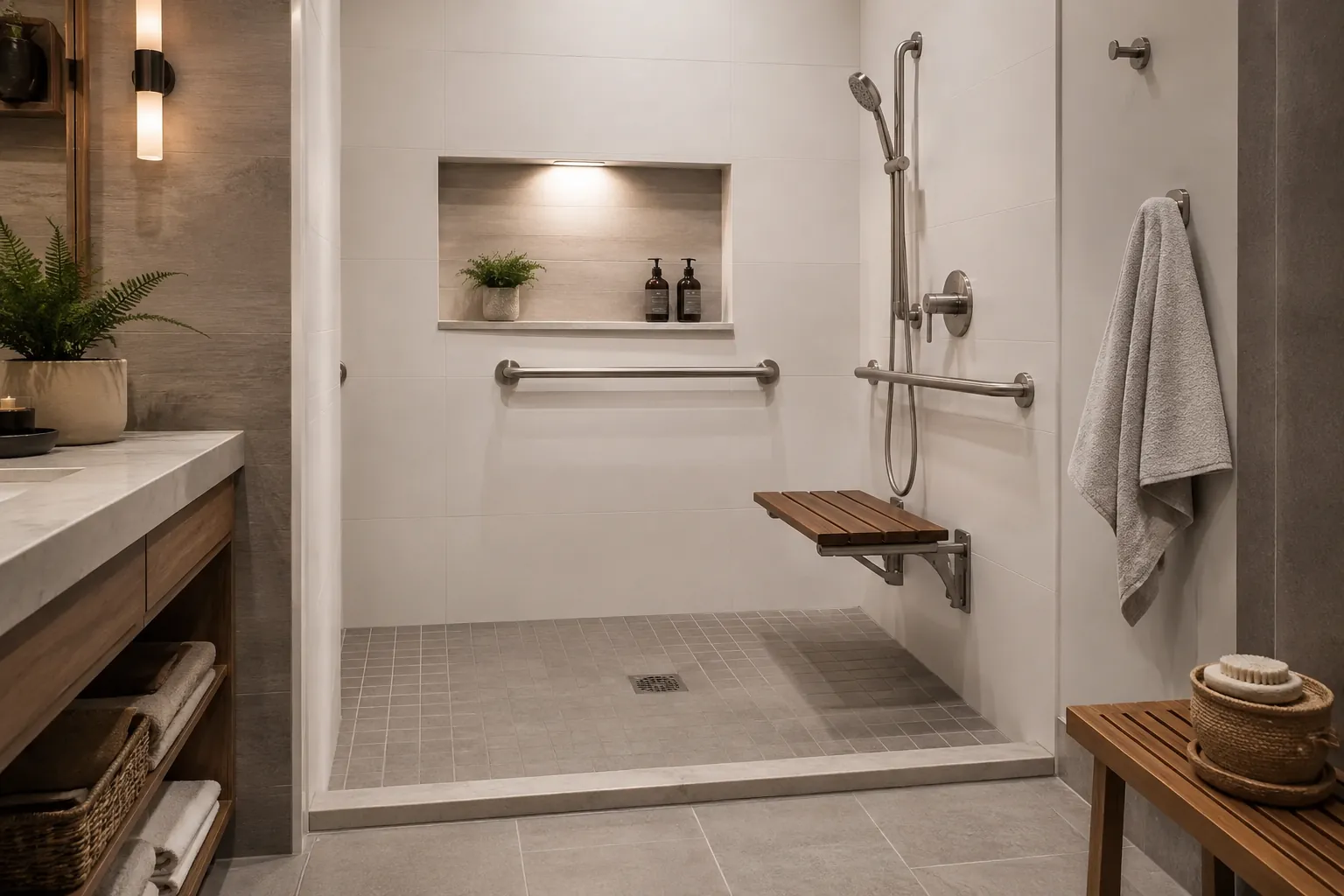
A new bathroom is the ideal time to think about the years ahead. A senior-friendly conversion does involve additional costs, but many measures are cheaper than you might think. It is important to distinguish between structural work that can only be done once and equipment that you can also add later.
The structural measures mainly include a low-threshold shower with a low entry, often referred to by professionals as a floor-level shower. It makes access much easier and looks modern at the same time. In addition, there should be a sufficient door width, a slip-resistant floor covering and enough manoeuvring space in front of the sanitary fixtures. The German standard DIN 18040-2 sets out corresponding minimum dimensions for accessible building design, which serve as a guide depending on the level of conversion. This work is particularly worthwhile in a 10 m² bathroom, because there is enough space left for comfortable walkways.
There is also a whole range of equipment that adds safety with a manageable amount of effort. Hinged support rails, a raised toilet and a sturdy seat in the shower can make everyday life noticeably easier and support independence. You will find many of these aids among our grab bars and toilet seat raisers or our shower stools and non-slip mats, which can also be fitted later. Please note: grab bars and hinged support rails must be fixed into load-bearing masonry. They should be fitted by a specialist company to make sure they hold securely. If you prefer a bathtub, sitting bathtubs for seniors with a low entry can be a comfortable alternative. For the shower, comfort showers with a low entry are a good choice, as they make the step in flat and safe.
Reducing the cost of a new 10 m² bathroom
There are many ways to keep costs within reasonable limits without saving in the wrong places. Good planning is decisive, because changes made during the construction phase are expensive and delay the work. If you know early on what you want, you avoid costly changes of mind.
One effective lever is doing some of the work yourself in the right places. Stripping out, painting or buying materials can often be done yourself, while plumbing and electrics belong in professional hands. It also helps to keep the layout as close as possible to the existing installation, because relocating pipes is one of the most expensive jobs. Standard dimensions and common formats for tiles and fixtures are cheaper than custom-made items.
The following checklist summarises the most effective ways to protect your budget:
- Obtain and compare several quotes from specialist companies
- Do the demolition, disposal and painting yourself
- Leave the sanitary fixtures in their existing positions
- Choose standard formats instead of custom-made items
- Consider a partial renovation if not everything needs replacing
- Book the work in the off-season, when companies have more flexibility
If you make use of every option, you can often reduce the cost of a new 10 m² bathroom by a noticeable amount.
Planning and carrying out a bathroom renovation smoothly
Careful planning determines the costs, the duration and your stress levels. Before the first tradesperson arrives, you should be clear about the layout, fittings and budget. Sketch out where the shower, bathtub, toilet and vanity unit should go, and consider early on whether an age-friendly conversion makes sense. This way you avoid expensive changes during the construction phase.
Depending on the scope and the size of the bathroom, a complete bathroom renovation usually takes between one and three weeks, and longer in older buildings if unexpected damage comes to light. Several trades work hand in hand, from the strip-out through the plumber and tiler to the painter. For this to run smoothly, a proper sequence is important, in which each trade builds on the previous one. If you do not hire a general contractor, you will take on this coordination yourself and should allow enough of a buffer.
When choosing specialist companies, look not only at the price but also at references, a clear written list of services and realistic dates. A binding quote with itemised costs protects you from nasty surprises and makes different providers comparable.
Frequently asked questions about costs
Depending on the fittings and scope, the cost of a new 10 m² bathroom runs to a five-figure euro sum in Germany. The largest share goes on the tradespeople's work, not on the materials. Only an individual quote that takes your starting situation into account will give you an exact figure.
Depending on the scope and the size of the bathroom, a complete bathroom renovation usually takes between one and three weeks. In older buildings it can take longer if hidden damage to pipes or walls comes to light. Good coordination of the trades noticeably shortens the construction time. Also plan in a buffer so that you are not left without a working bathroom if one trade is delayed.
A senior-friendly bathroom involves moderate additional costs compared with a standard bathroom, mainly due to a low-threshold shower, wider walkways and safety equipment. If you plan early, age-friendly features can often be integrated at little extra cost.
Are you wondering which age-friendly equipment suits your new bathroom? Take your time to compare the right products.


