


Possible materials for the bathtub
Bathtubs are now available in many different versions, and the various materials each have their own advantages and disadvantages. The material can also have a lasting influence on how the bathtub affects the room. A bathtub made of steel or enamelled steel, for example, has a very different effect from an acrylic bathtub made of fibreglass-reinforced acrylic or a wooden bathtub.
The following materials are available for modern and timelessly classic bathtubs:
- Acrylic / fibreglass-reinforced acrylic
- Concrete
- Stainless steel
- Glass
- Cast iron
- Wood
- Ceramic
- Copper
- Cast mineral
- Natural stone
The individual materials differ not only in appearance but also in their specific properties. In addition, some of them put considerably more strain on the budget than others because of the amount of work involved. Natural stone bathtubs, for example, are difficult to make and correspondingly expensive, while modern acrylic or ceramic are in many cases much easier on the budget.
It is not just a question of your own taste, but also of which bathtub suits you. Only the combination of the right shape, the right type of bathtub (shower bath, sitting bathtub or freestanding bathtub) and the material ensures a high level of bathing comfort.
The bathtub material and the style of the bathroom
When choosing the material, the style of the whole bathroom naturally plays an important role too. After all, the bathtub is normally the central element of a bathroom and often defines its style. Natural materials such as wood or natural stone, for example, give the bathroom a natural touch and look particularly good in country-style bathrooms. But a freestanding copper bathtub in an otherwise simply designed bathroom also enhances the room.
Modern designer bathtubs made of steel, or bathtubs made of glass or cast mineral, come into their own above all in modern bathrooms with clean lines. Of course, the final choice is up to you. You can also deliberately break with the style of the bathroom through the bathtub and draw even more attention to your bathroom furnishings.
The materials in detail
If you want to buy a new bathtub, you have plenty of choice. We show you the advantages and disadvantages of each material in detail.
Bathtubs made of acrylic and enamelled steel
Bathtubs made of enamelled steel and fibreglass-reinforced acrylic are the most widespread. They are highly resistant to impact and breakage. Both versions are also light to install and therefore easy to fit. Acrylic and enamelled steel bathtubs are the most affordable option and put only minimal strain on your budget. Even so, many different shapes are available, so you can still realise your own design ideas.
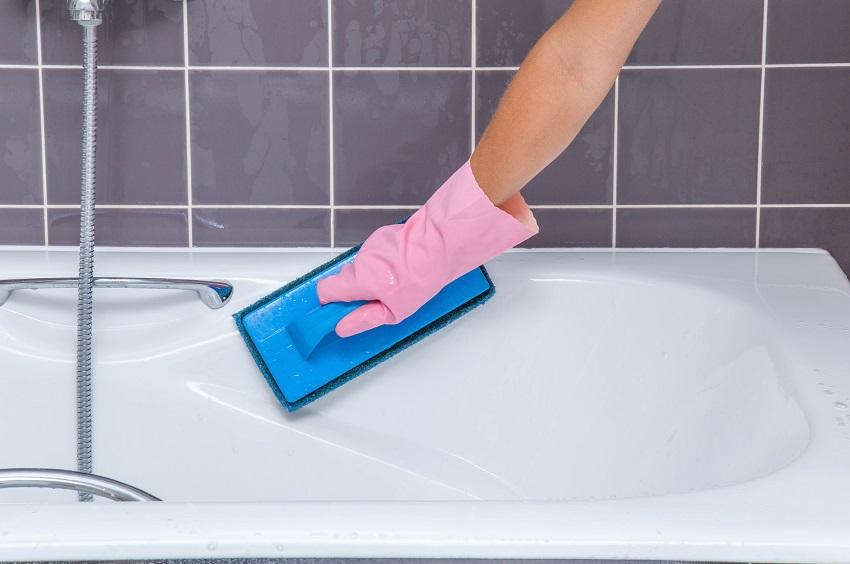
When it comes to cleaning, both enamelled steel and acrylic bathtubs are particularly easy to care for. Both can be cleaned with a soft sponge or a soft cloth and liquid washing-up detergent. It is important not to treat them with abrasive cleaners or cleaning agents. With acrylic bathtubs, you should also not use standard limescale removers. These can discolour the acrylic and permanently spoil the look of the bathtub.
Bathtubs made of cast mineral: the material for flexible requirements
Bathtubs made of cast mineral are extremely flexible and are therefore popular in designer bathrooms. The material can not only be cast into almost any shape, but can also be worked very well afterwards. However, there are many different material combinations with different properties:
- Quaryl
- Corian
- Duralight
- Ceramilux
- White Tec
- Resin Stone
- Cristalplant
- Duralmond
The individual materials also differ considerably in their care instructions. With Quaryl, for example, you must avoid scouring agents and abrasive sponges, whereas with Corian you can use scouring powder or a special Corian sponge for stubborn stains. Cristalplant, on the other hand, tolerates scouring cream and scouring sponges, but must not be cleaned with chemically aggressive cleaners. For this reason, always follow the manufacturer's instructions for the specific material.
Bathtubs made of wood, glass, natural stone or concrete
These bathtubs are ideal for true individualists who want to make a statement with a distinctive design and a special feature in the bathroom. These bathtubs can usually also be customised, creating a real showpiece for your own bathroom. Bathtubs made of natural stone and concrete, however, are very heavy. You should therefore always check the load-bearing capacity of the floor before ordering and installing such bathtubs. As various colour pigments can also be added to the concrete on request, customised colour solutions are no problem either.
Glass, on the other hand, stands out for its hardness, its very good thermal conductivity and its distinctive appearance. Glass bathtubs can also be combined very well with other materials. A wooden bathtub, in turn, is a real eye-catcher. Thanks to different types of wood and grain, particularly attractive effects can be achieved.
Cleaning and care are not easy with any of these materials. Although glass itself is a robust material, the fight against water marks and limescale can take a lot of time. Standard glass cleaner can make the job much easier here. Wood needs even more care. Harsh cleaning agents must never be used on wooden bathtubs. Natural soap and microfibre cloths are the best choice here. Natural stone bathtubs also need careful care: acidic cleaners can quickly discolour the stone. Therefore only use cleaners suitable for natural stone on these bathtubs.
Bathtubs made of cast iron or copper
Cast iron and copper are classic materials in bathtub making and were already used centuries ago. Once filled with water, both materials take on the temperature very quickly and feel pleasant to lie in. Both cast iron and copper are also very easy to clean, so there is no need for chemical cleaners.
Acidic cleaners and scouring agents in particular should be avoided, as they could damage the appearance of the bathtubs. So pay close attention to cleaning tips when you clean your bathtub. Many of these tips only apply to bathtubs made of acrylic or enamelled steel and not to the alternative materials.
©iStock.com/hikesterson ©iStock.com/FotoDuets ©iStock.com/Tatiana1987


